
We arrived at the entrance to the Lyttos Beach Hotel at 9:05 am, to await our tour bus. Ahead of us is the Minoan palace of Knossos, and the capital city of Heraklion.
Our multilingual guide introduced herself as Irene and gave an overview of the day ahead in English and French.
Our first stop was the Palace of Knossos.
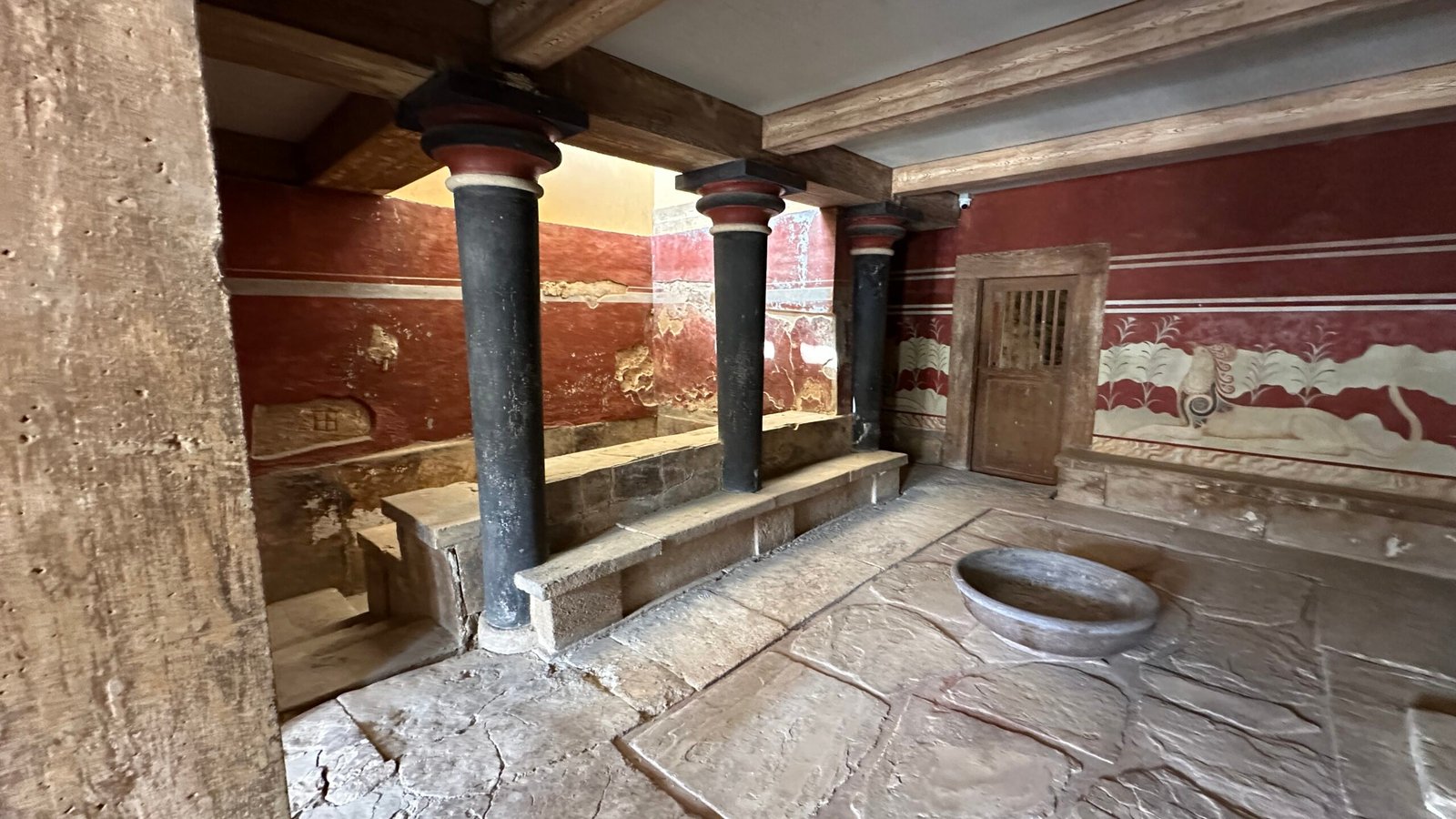
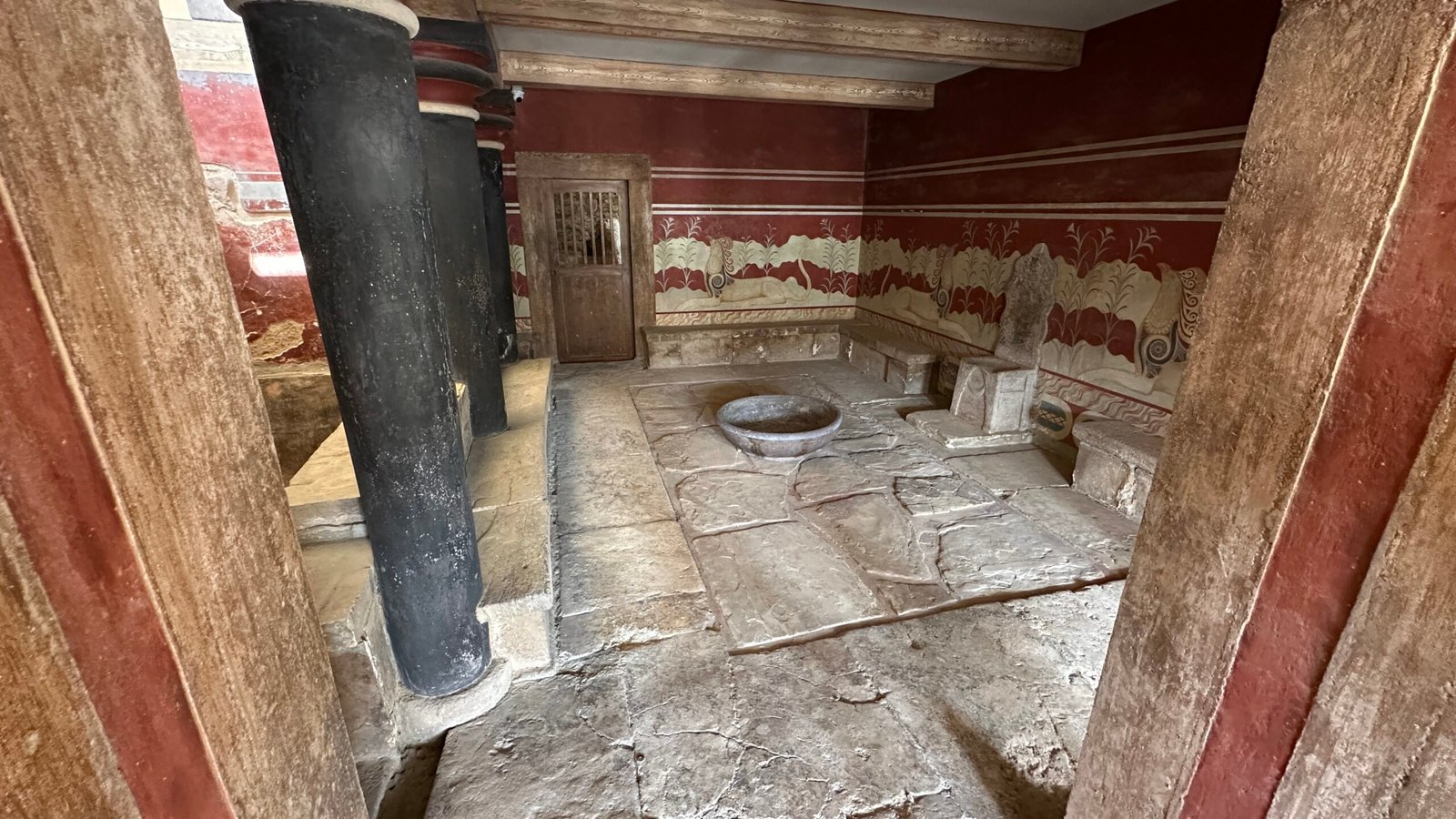
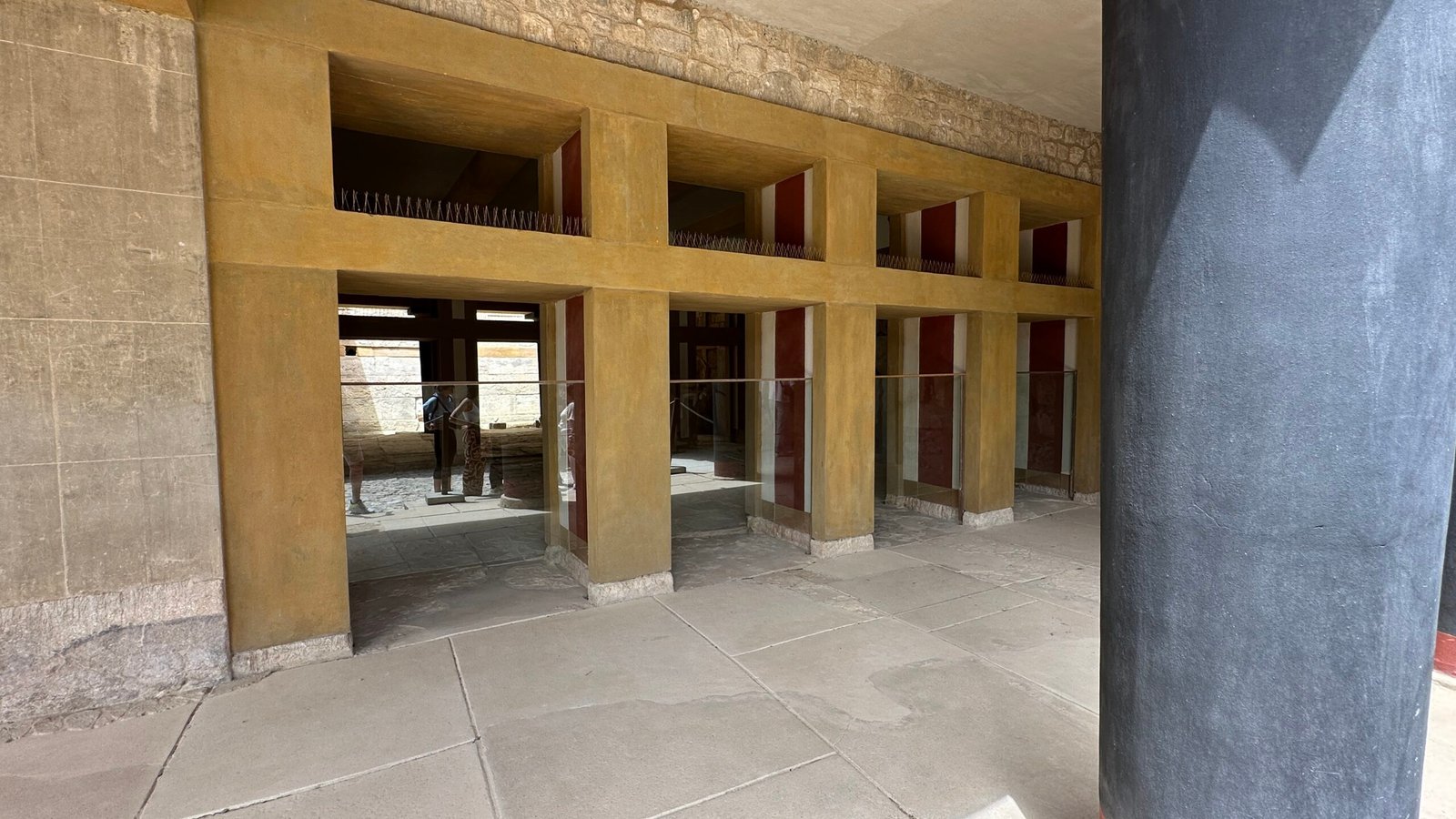
The throne room has been partially restored. It had two floors. The bottom floor was for meetings while the upper floor behind the black columns housed a throne and a place where offerings were made.
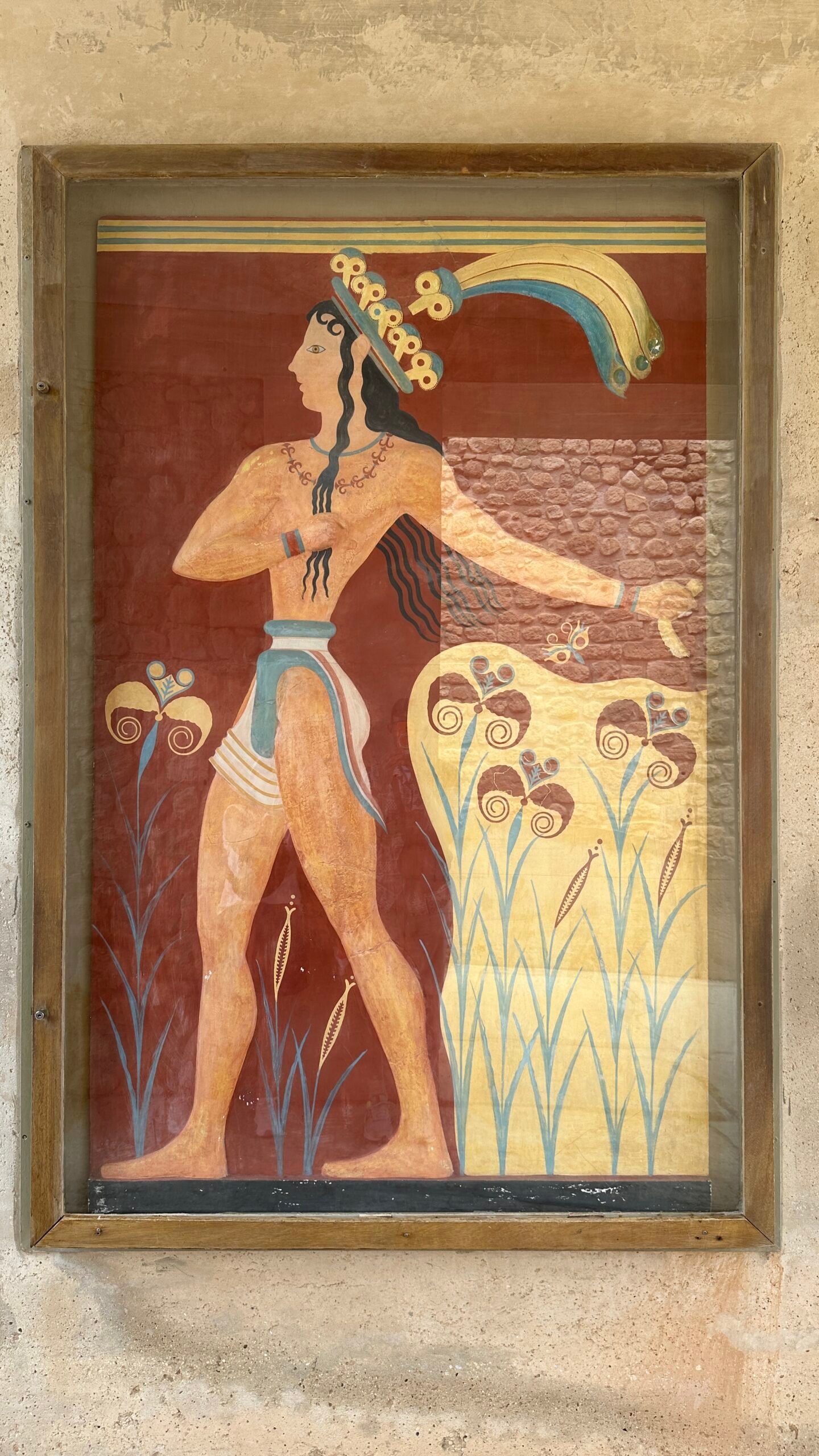
We were then shown a fresco of the high priest. Two things you need to know about Minoan civilisation, they often painted the men in a brown colour and the women in white. And men and women played an equal role in society unlike other European civilisations. In their ceremonies, the women were sometimes illustrated wearing the same dress as the men. These factors have caused archaeologists to question whether the figure in the image below is a man or a woman. Many believe it is in fact the high priestess.
The grand staircase connected the two lower floors and was surrounded by a set of wooden columns. When the palace was excavated, the lower flights of stairs were discovered intact, but the upper flights needed to be reconstructed.
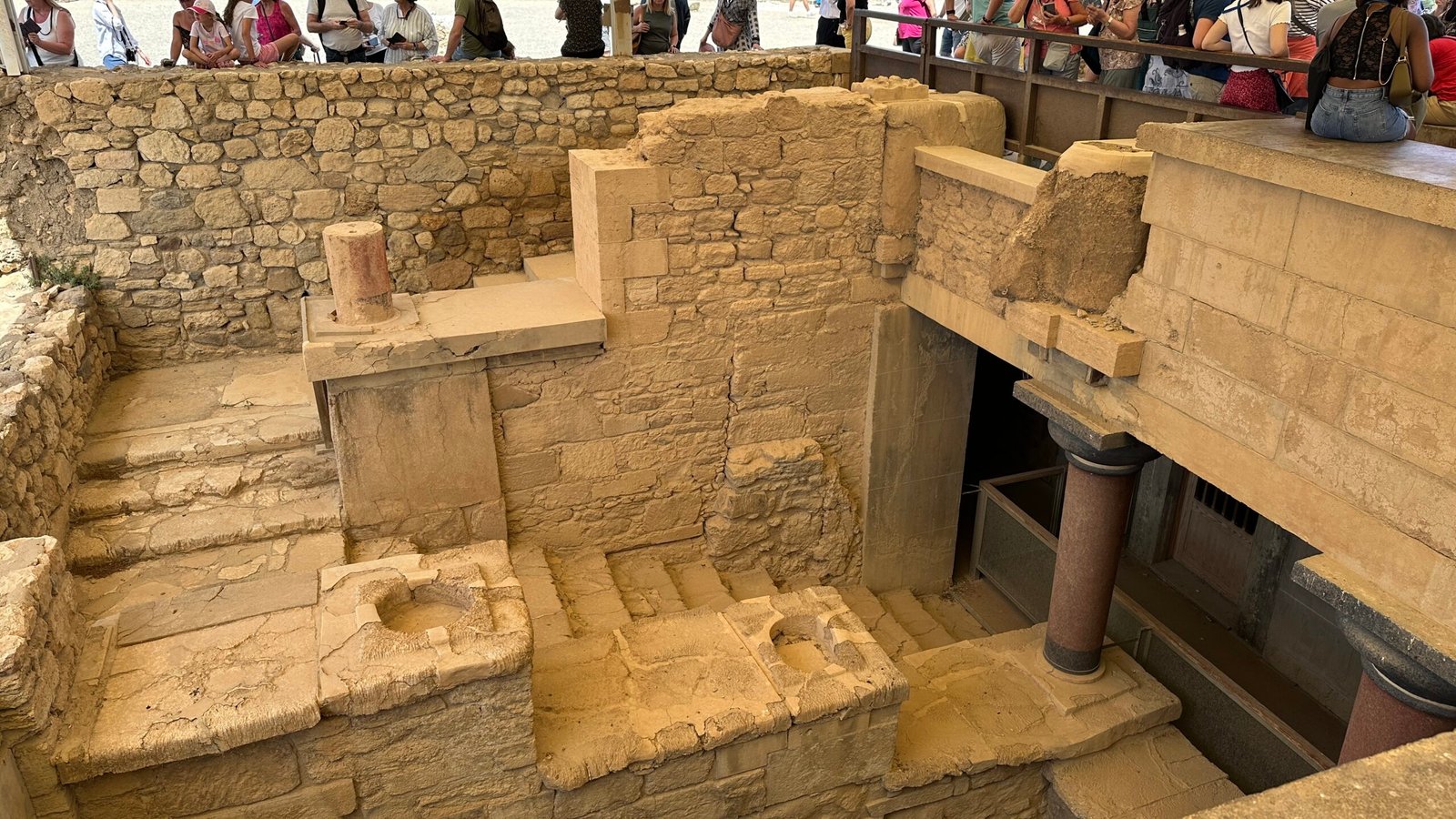
From the items found, it’s been hypothesised that the first floor below the coup was the royal apartments.
The royal apartments had their own bath chamber and toilet, complete with a drainage system that ran beneath the apartments. Pretty advanced for three thousand years ago. And way ahead of our ancestors in Northern Europe.
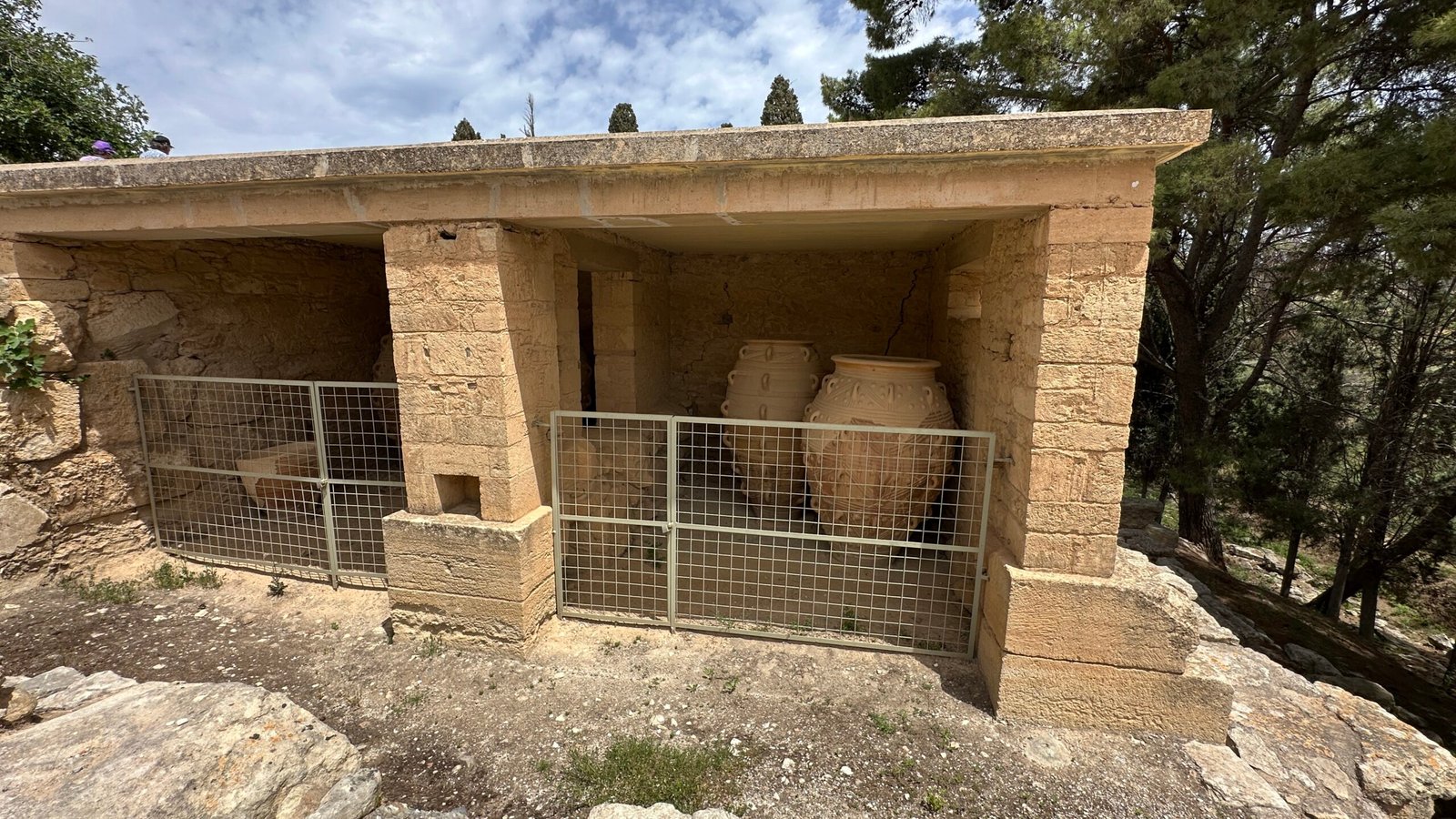
The giant Pithol were created in the palace and adorned with discs, ropes, and other ornaments. From where we were standing my guess is they were 5ft high and between 2 and 3 ft wide. The entrance to where the craftsmen worked was on a direct route from the royal apartments, making archaeologists speculate that the craftsmen were under royal command.
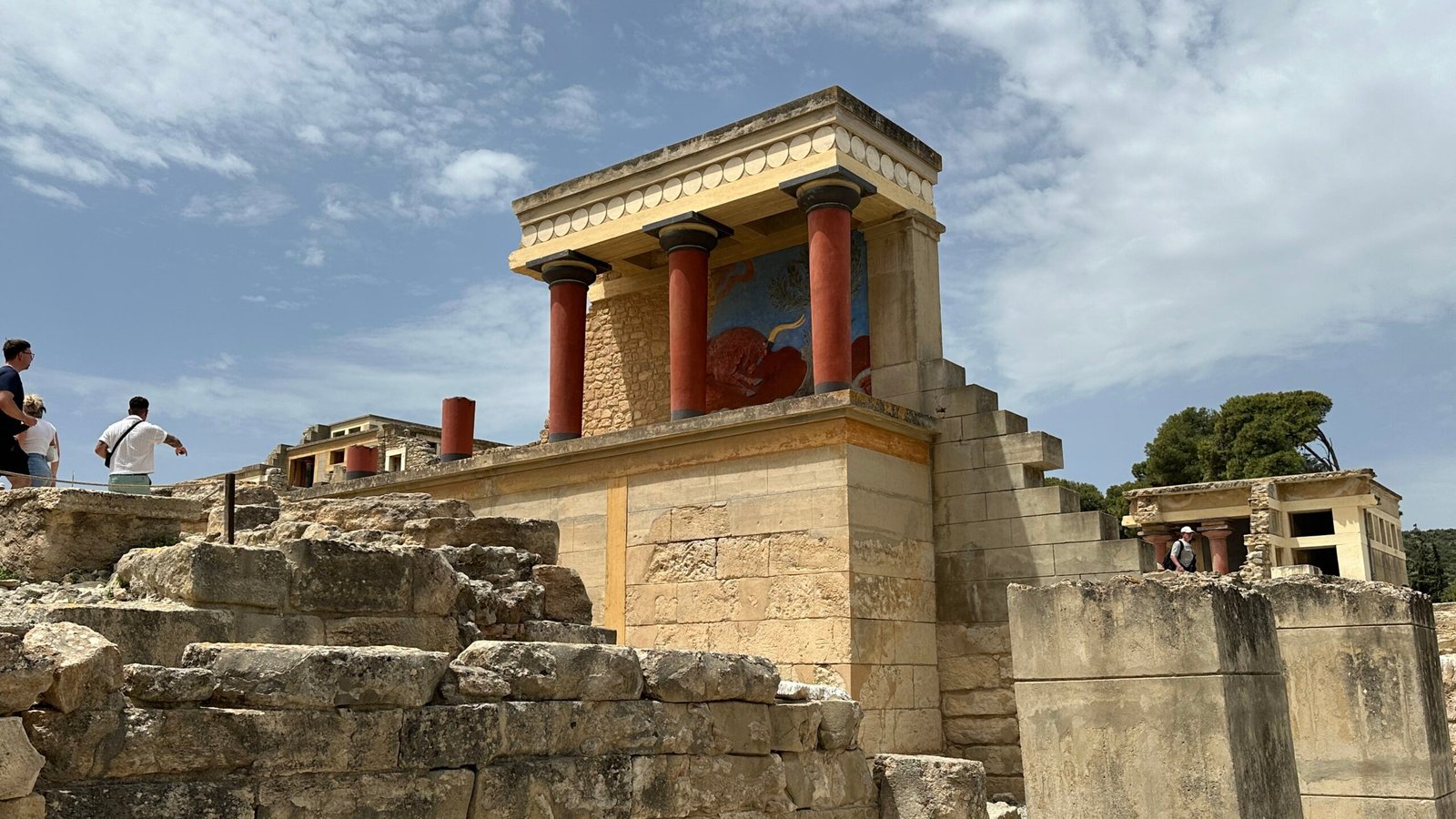
The famous painting of the bull is likely to have contributed to the legend of the minotaur, and was a symbol of power. The bull played a central role in many of their ceremonies and was eventually sacrificed to the god of fertility by the high priestess.
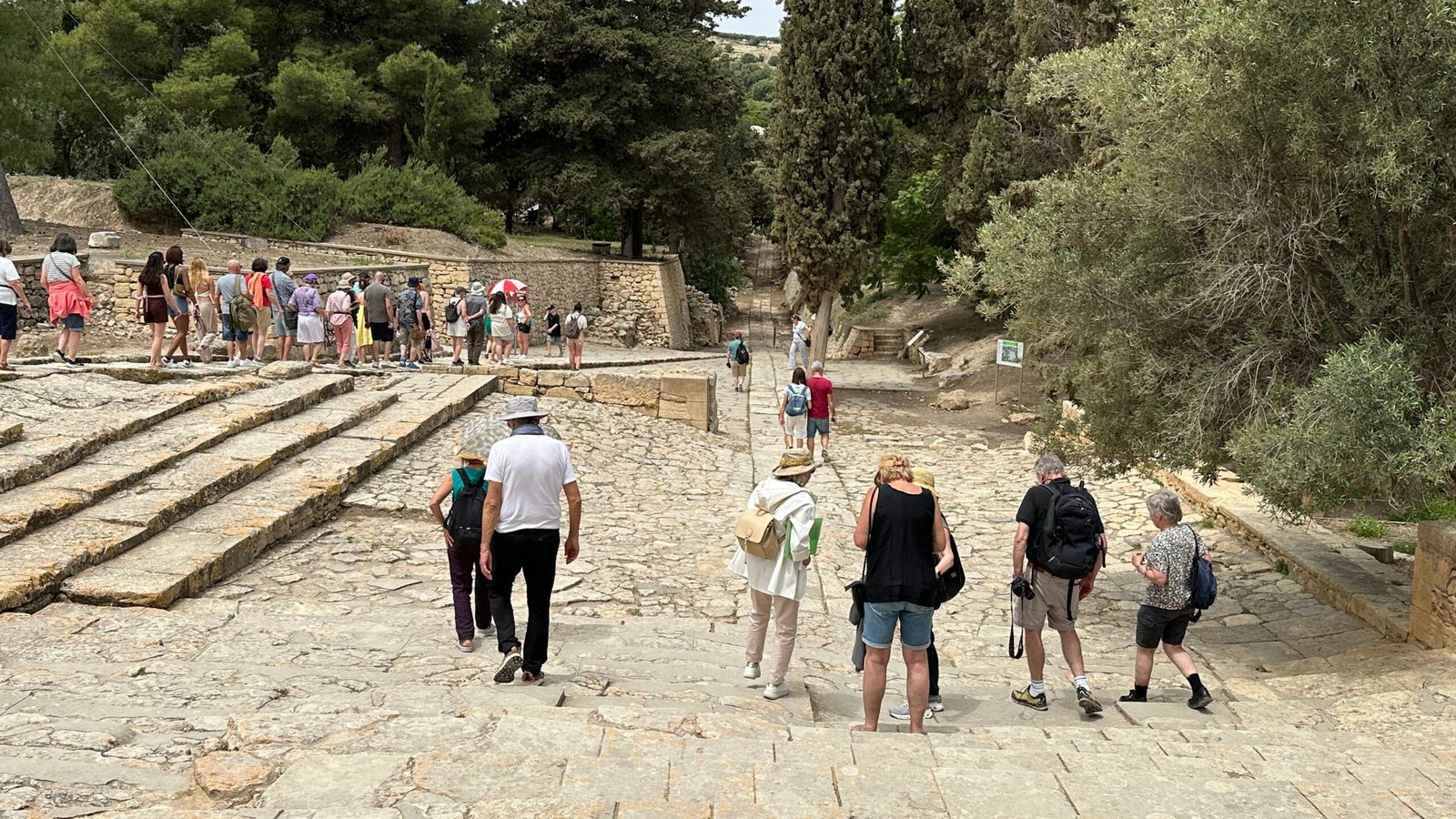
On our way out of the palace grounds, the tour guide paused to show us the ceremonial entrance to the palace, which led up from the town of Knossos. It wasn’t hard to imagine the agricultural produce being hauled up to the palace. Or captured prisoners being dragged along this route to face judgement in the palace.
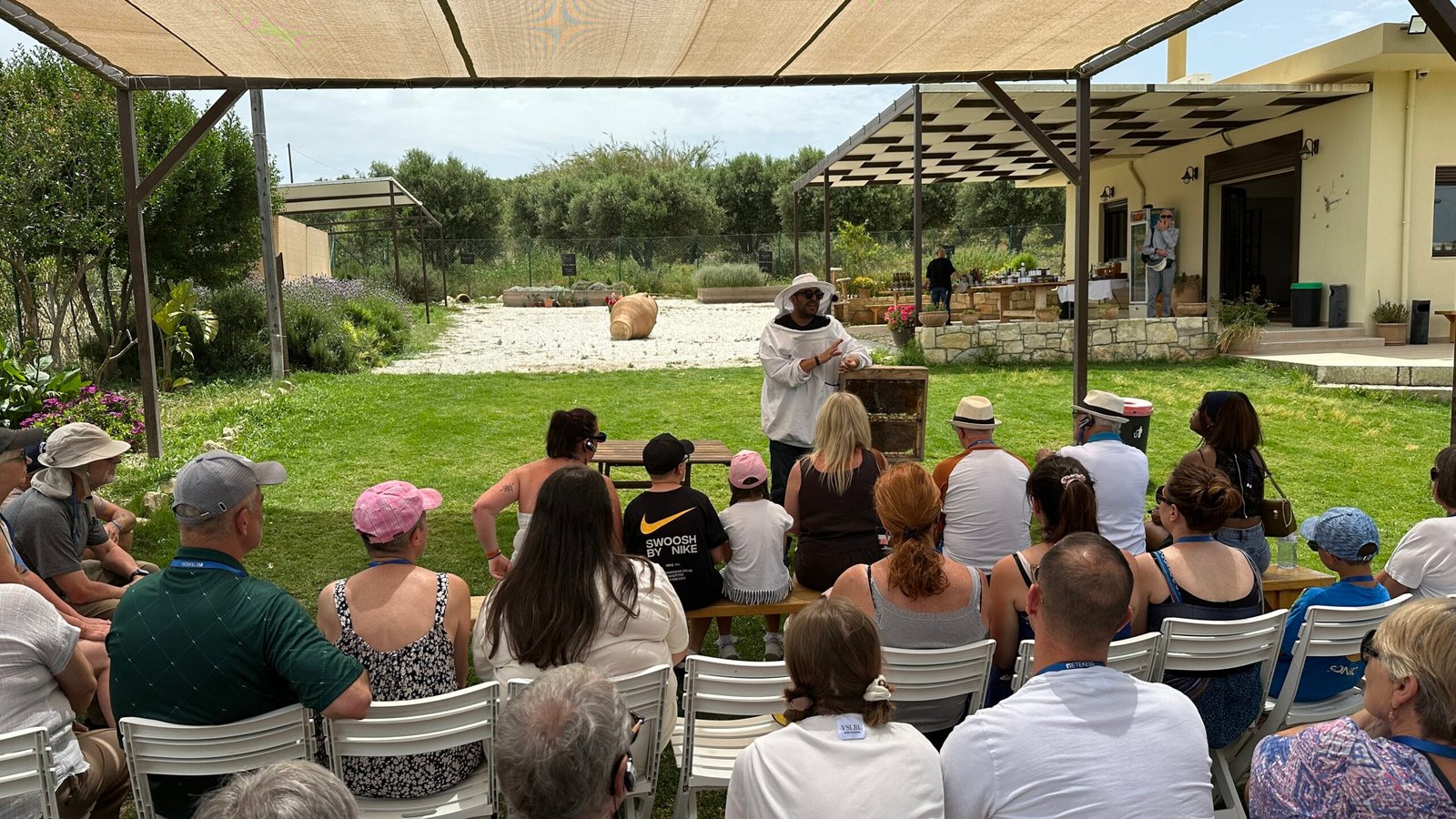
All too soon our tour was over and we travelled to a small farm which made olive oil, honey and jam. When we arrived we were handed a small cup of herb tea, three cups were most welcome as I was really thirsty by then.
They had some sample pots of honey and trays of bread to dip into the olive oil which went down well with the ladies.
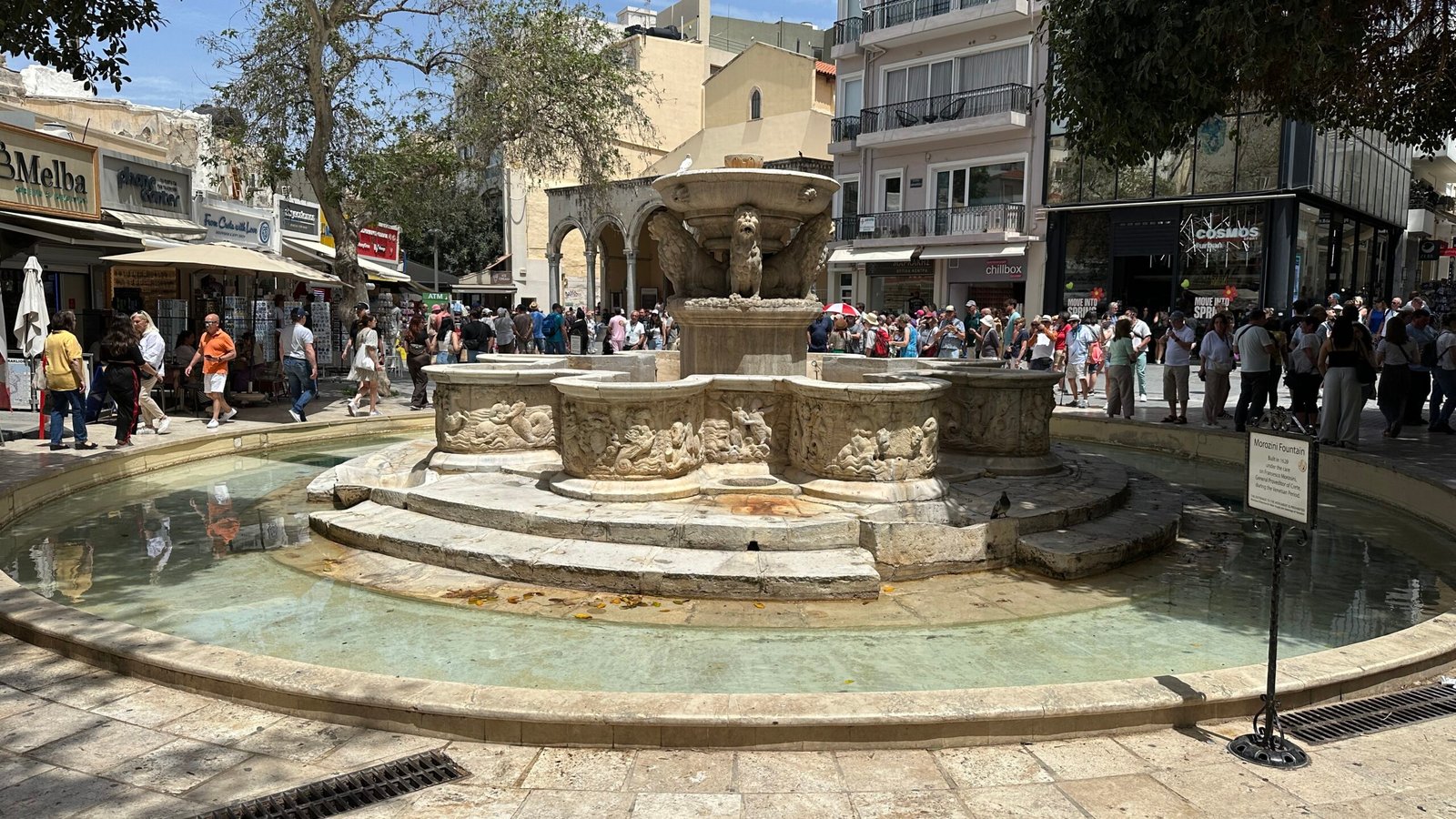
Our final stop was the capital city of Heraklion, which has only been the capital since the Arabs invaded in 9AD. The Venetians occupied the city for many years beforehand and added the fortified walls. Our guide walked us into the old square from where you could see the docks and then onwards to the oldest part of the city where the famous lion fountain can be seen
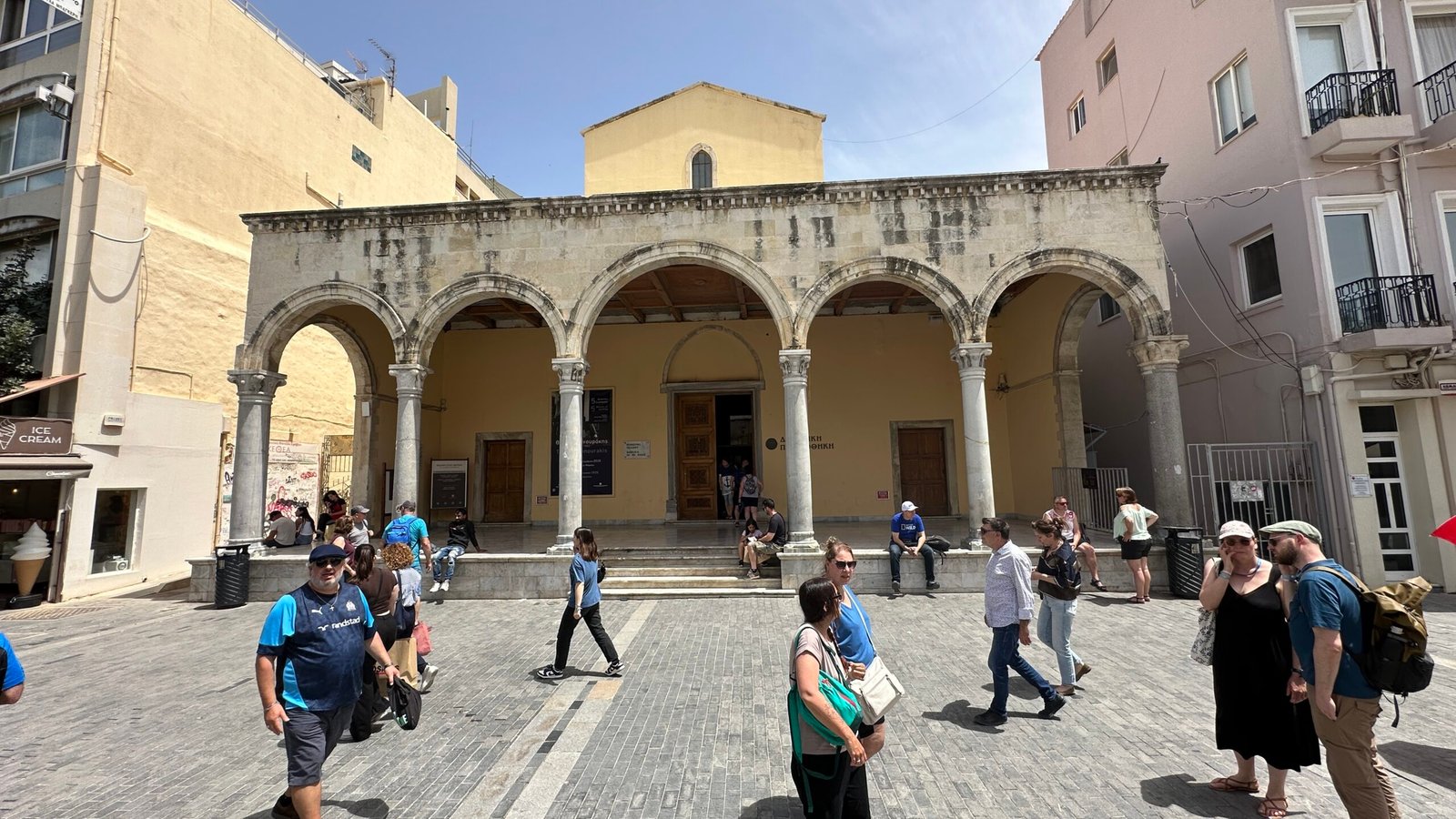
And the Cathedral of St Mark. This is a direct link back to the Venetian rule and the famous basilica in Venice in St. Mark’s Square.
Eventually, our guided tour concluded and we were on free time, with the command to be back at the coach by 3:45 pm ringing in our ears. If you’re thinking it was about time for lunch, you’d be correct. Liz would argue lunch was overdue!
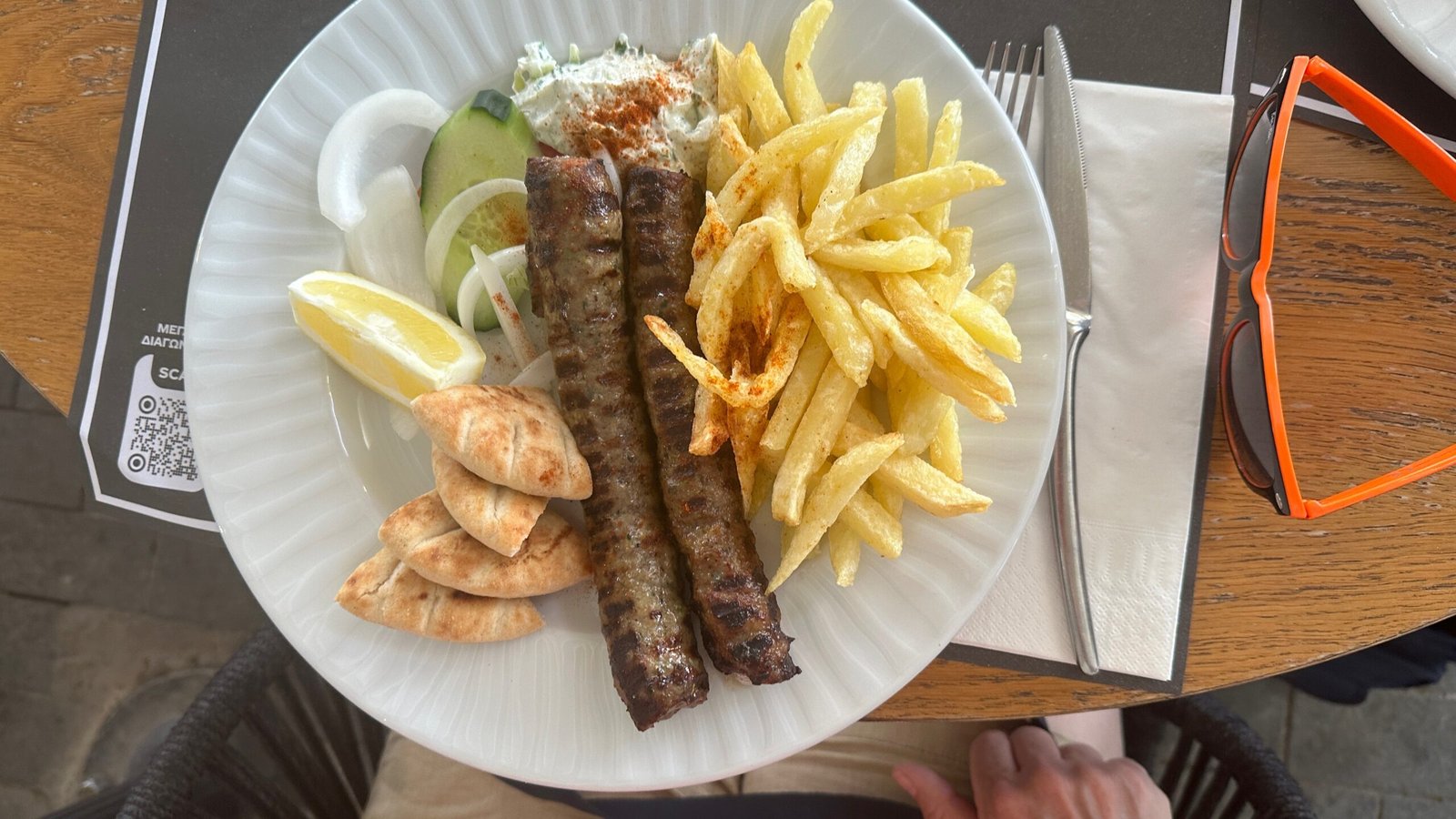
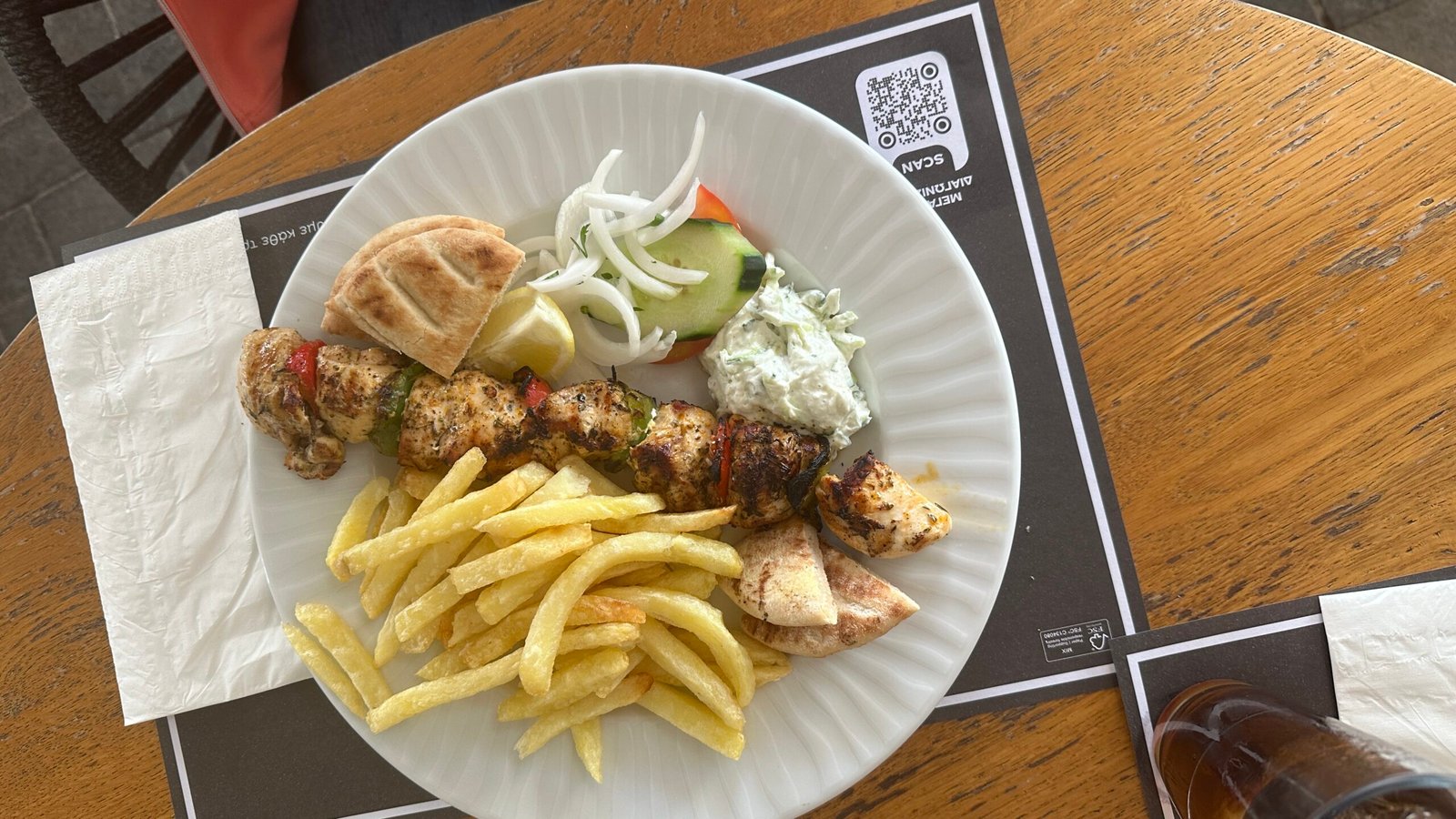
We didn’t have trouble finding a suitable spot among the dozen restaurants immediately around us. And fifteen minutes later Liz was tucking into a freshly grilled Kebab, and Char was chowing down on a large chicken skewer.
It was a lovely day and a complete change from what’s become our usual relaxed itinerary.